



Making Smarter Urban Decisions Through Interactive Digital Twins at BINUS University
Jakarta, 13 October 2026 – How can cities make better decisions when the data needed to solve complex problems is not readily accessible? This question opened the Business and Technology International Seminar Series at BINUS University, held @BINUS @Alam Sutera – Main Campus and featuring Dr. John Isaacs, Dean of the School of Computing, Engineering and Technology (SoCET), Robert Gordon University, in a session titled Building Smarter Cities: The Power of Interactive Digital Twins for Strategic Decision Making.
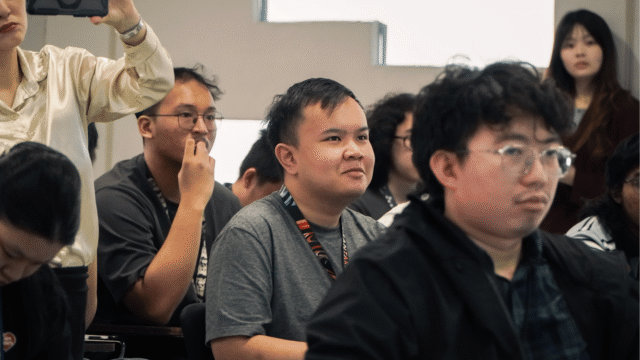
Photo Credit: Andi D. Ahnafandra | Photo Editor: Mufti Ardin
Initiated by the Internationalization Unit and in collaboration with The School of Computer Science at BINUS @Alam Sutera, the seminar introduced students to the potential of interactive digital twins in helping decision makers understand complex urban challenges. Dr. Isaacs explained how high-resolution 3D scanning, interactive data visualisation, and computer game technology can be combined to create virtual representations of real environments, enabling users to explore data and assess the potential impact of decisions before implementing them.
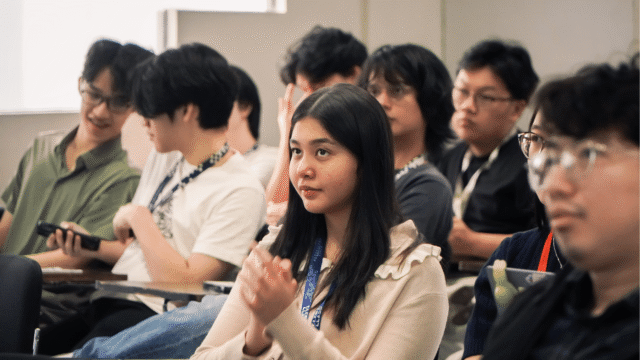
Photo Credit: Andi D. Ahnafandra | Photo Editor: Mufti Ardin
Drawing on a city-wide digital twin project in Aberdeen, Scotland, Dr. Isaacs demonstrated how realistic virtual environments can help make complex information more accessible to people from different backgrounds. He also used gaming as an analogy to explain how interactive simulations allow users to test scenarios, explore possible outcomes, and better understand how decisions may affect their surroundings.

Photo Credit: Andi D. Ahnafandra | Photo Editor: Mufti Ardin
“Gaming technology allows us to recreate real world environments, simulate different scenarios, and explore potential outcomes before making decisions. Combined with Generative AI, it opens even greater possibilities for solving complex problems and making data more accessible. Our next generation is already well positioned to take these technologies further,” said Dr. John Isaacs.
The presentation captured students’ attention through its smooth delivery and relatable gaming examples, helping them follow how advanced technology can support strategic decision making. The session continued with an interactive question and answer segment moderated by Anderies, M.Kom., Concentration Content Coordinator of the Computer Science Program at BINUS University. Students engaged with the topic and explored the potential applications of digital twins in addressing real world challenges.
chaca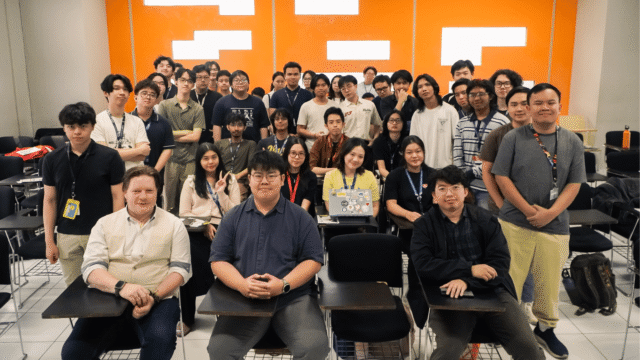
Photo Credit: Andi D. Ahnafandra | Photo Editor: Mufti Ardin
Through this seminar, BINUS University provided students with an opportunity to explore how computing and emerging technologies can contribute to smarter, more informed urban planning and decision making.
Author: Yusuf Rifai | Editor: Aninda Rahmasari

Comments :