


BINUS Students Explore Japanese Workplace Culture and Global Career Expectations Through Career Sharing Session
Jakarta, 1 October 2026 – As students prepare to enter an increasingly global job market, understanding what employers look for and how workplace culture shapes professional expectations can be just as important as developing academic and technical skills. Bringing these perspectives to BINUS students, the BINUS Internationalization Unit (IZN), in collaboration with JAC Recruitment, held the “Global Career Journey: Understanding Japanese Workplace Culture and Professional Expectations” session at BINUS @Kemanggisan Anggrek Campus.
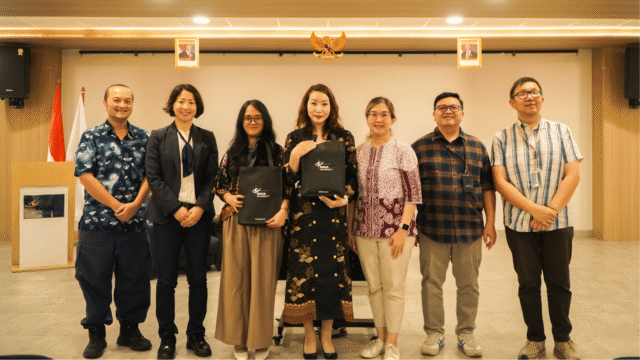
Photo Credit: Andi D. Ahnafandra | Photo Editor: Mufti Ardin
The session opened with Dr. Elisa Carolina Marion, Dean of the Faculty of Humanities, presenting tokens of appreciation to the two speakers, Gianina Godine Mamoto (Gege), Recruitment Manager, Japanese Division & Multinational Division, and Hiroko Otsubo, Management Consulting Manager and Head of Japan Market. The session was moderated by Momoko Takai, B.Ec., M.Ed., Lecturer Specialist, Japanese Literature Department.
The session was opened with the presence of Dr. Elisa Carolina Marion, Dean of the Faculty of Humanities, who welcomed the speakers and participants and represented BINUS in the opening of the session. In collaboration with JAC Recruitment Indonesia, the session featured Gianina Godine Mamoto (Gege), Recruitment Manager, Japanese Division & Multinational Division, and Hiroko Otsubo, Management Consulting Manager and Head of Japan Market. It was moderated by Momoko Takai, B.Ec., M.Ed., Lecturer Specialist, Japanese Literature Department.
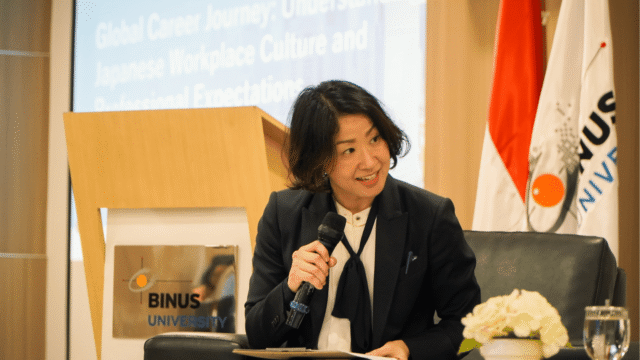
Photo Credit: Andi D. Ahnafandra | Photo Editor: Mufti Ardin
Opening the discussion, Gege focused on the realities of today’s recruitment landscape and the practical steps students can take before graduation. Drawing from her more than nine years of experience in recruitment, she highlighted that employers assess candidates beyond academic qualifications, considering factors such as skills, experience, communication, professionalism, motivation, and potential.
“The competition in today’s job market is real, and employers look at candidates holistically throughout the recruitment process. Building your profile before graduation can make a difference, whether through internships, organizations, projects, language skills, or professional networking. Do not wait until you feel ready. Start preparing and building your experience early,” said Gege.
The discussion also covered practical aspects of entering the workforce, including building a strong CV, preparing for interviews, researching prospective employers, and presenting achievements clearly. Students were encouraged to tailor their applications to each opportunity and demonstrate the value they can bring rather than simply meeting the requirements of a job description.
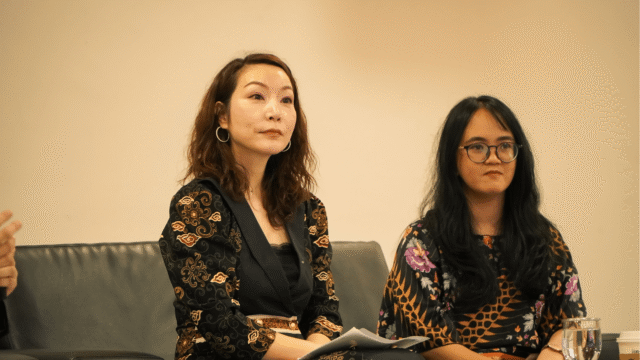
Photo Credit: Andi D. Ahnafandra | Photo Editor: Mufti Ardin
The session then moved into Japanese workplace culture, led by Hiroko, who has more than 10 years of experience in recruitment, talent management, business development, and leadership across Japan, China, and Indonesia. Her discussion explored common perceptions of Japanese companies while highlighting the importance of understanding workplace practices within their specific organizational context.
Hiroko emphasized values such as teamwork, reliability, communication, accountability, and continuous improvement. She also addressed common misconceptions about Japanese companies, noting that while teamwork is highly valued, employees are also expected to take responsibility for their work and communicate issues early. The concept of Kaizen, or continuous improvement, was introduced as an approach to making small, consistent improvements in everyday professional life.
“There are many perceptions about working in Japanese companies, but not all of them are true. Teamwork is highly valued, and employees are expected to collaborate and support team objectives. At the same time, problems should be communicated early rather than being kept to yourself. Japanese language fluency is not always required, especially in multinational Japanese companies, although it can be an advantage depending on the role,” said Hiroko.
The session also featured a Q&A session, giving students the opportunity to interact directly with both speakers and ask questions related to recruitment, career preparation, workplace culture, and working in international environments. This exchange allowed students to connect the topics discussed with their own career interests and gain further insights from the speakers’ professional experiences.
The discussion further highlighted that international career opportunities can take different forms, from working with Japanese companies in Indonesia to pursuing opportunities abroad. Beyond technical expertise, students were encouraged to develop communication, adaptability, cultural awareness, collaboration, problem solving, and digital literacy to navigate diverse professional environments.
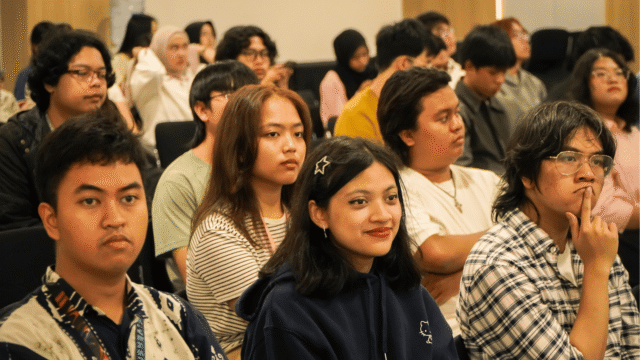
Photo Credit: Andi D. Ahnafandra | Photo Editor: Mufti Ardin
For BINUS students, the session provided an opportunity to connect classroom learning with firsthand perspectives from professionals working directly with employers and talent across different markets. By combining practical recruitment guidance with insights into workplace culture and direct interaction with industry professionals, the session encouraged students to approach their career preparation with greater awareness and readiness.
As students look ahead to their professional journeys, the session reinforced that career preparation begins well before graduation. Through building experience, developing professional skills, expanding networks, and continuously learning, students can take meaningful steps toward navigating the increasingly interconnected world of work.
Author: Yusuf Rifai | Editor: Aninda Rahmasari

Comments :