



Nationwide University Leaders Gather at BINUS University for the Second Day of the Higher Education Leadership Academy 2026
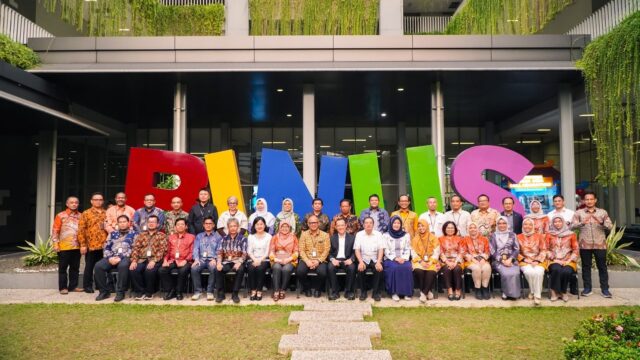
Jakarta, 9 September 2026 – Strengthening leadership in higher education, the Ministry of Higher Education, Science, and Technology held the 2026 Higher Education Leadership Academy Phase (AKPT) 1 on September 7-8 in a hybrid format. BINUS University was honored to host the second day of the program at BINUS @Alam Sutera – Main Campus, bringing together 107 higher education leaders and aspiring leaders from more than 40 institutions nationwide to develop the leadership capabilities needed to advance the global competitiveness of Indonesian higher education.
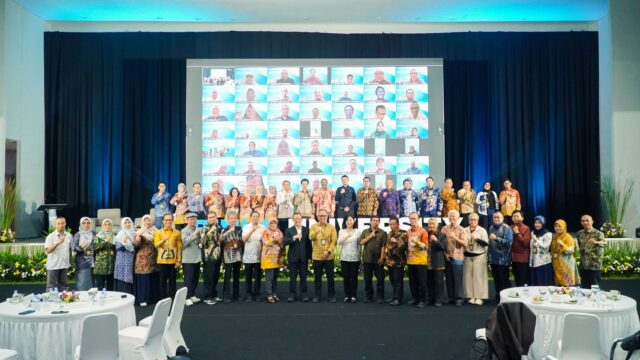
(Photo Credit: Mufti Al-Warits/Photo Editor: Andi D. Ahnafandra)
As universities strive to strengthen their global standing, leadership must remain deeply rooted in local wisdom. By combining an understanding of local values with global needs, perspectives, and challenges, higher education leaders can develop relevant solutions, foster collaboration, and drive sustainable impact across the education sector.
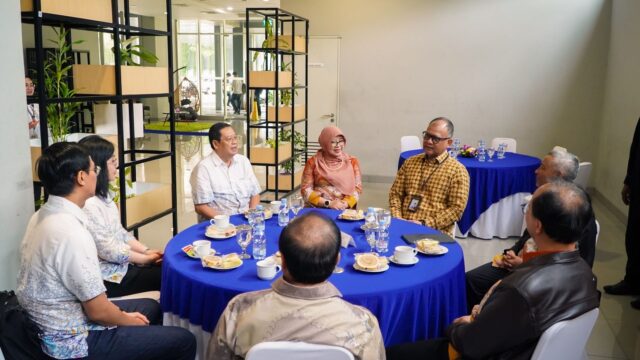
(Photo Credit: Mufti Al-Warits/Photo Editor: Andi D. Ahnafandra)
“Blending local wisdom with global leadership is key to building universities that are both globally competitive and locally relevant. To do so, higher education leaders must build long-term strategies to address today’s challenges while ensuring graduates are equipped with the skills and competencies needed in a changing world. Universities must also continue to uphold integrity, not only as an institutional value but as a responsibility to society, given their role in shaping the character and values of future generations,” said Prof. Sri Suning Kusumawardani, Director of Human Resources at the Directorate General of Higher Education.
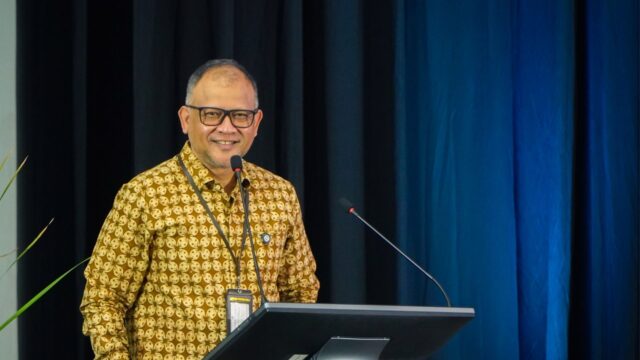
(Photo Credit: Mufti Al-Warits/Photo Editor: Andi D. Ahnafandra)
Expanding on the need for strong leadership, Prof. Khairul Munadi, Director General of Higher Education at the Ministry of Higher Education, Science, and Technology, shared six capitals are needed to boost the university’s competitiveness: financial, human, intellectual, physical, network, and reputation capital. He emphasized that effective leaders must be able to set clear priorities, allocate resources strategically, and ensure that every initiative contributes to the institution’s long-term impact.
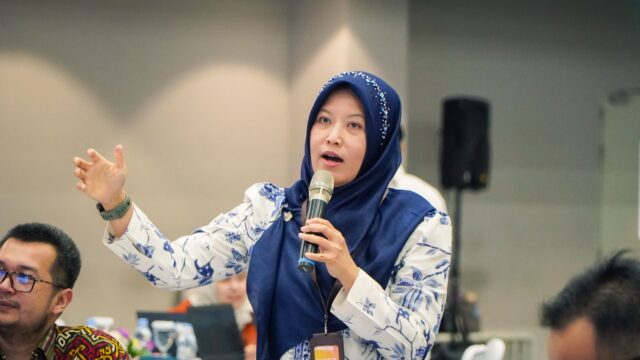
(Photo Credit: Mufti Al-Warits/Photo Editor: Andi D. Ahnafandra)
Prof. Khairul pointed to strategic collaboration as one of the key drivers of global impact. By fostering partnerships with domestic and international institutions through mobility programs, joint research, academic collaborations, and innovation initiatives, universities can broaden their global knowledge networks and enhance their reputation. In this regard, internationalization should be closely aligned with efforts to strengthen global knowledge exchange and collaboration.

(Photo Credit: Mufti Al-Warits/Photo Editor: Andi D. Ahnafandra)
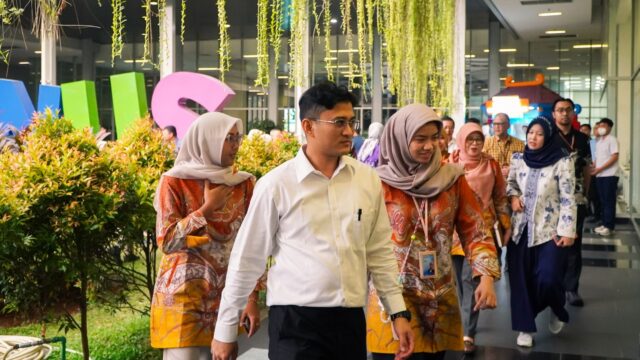
The emphasis on strategic leadership and global collaboration aligns closely with BINUS University’s efforts to achieve its Vision 2035: “A world-class university fostering and empowering society in building and serving the nation.” Over the past two decades, BINUS has built an extensive international network, partnering with more than 400 universities and 2,200 industry partners worldwide. These collaborations have played an important role in strengthening the university’s academic quality, expanding global opportunities for students and faculty, and enhancing its contribution to society.
(Photo Credit: Mufti Al-Warits/Photo Editor: Andi D. Ahnafandra)
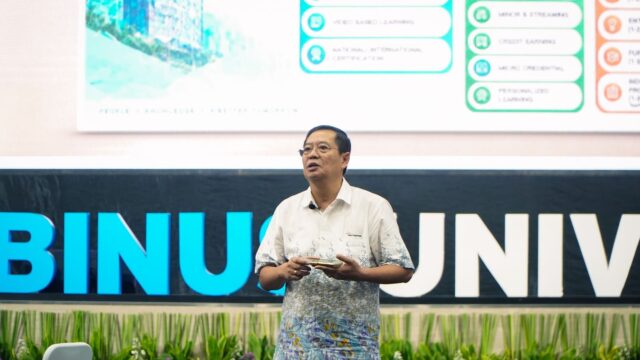
Such progress, however, requires leadership that can continuously align institutional ambitions with long-term execution. Reflecting on his leadership journey as Rector of BINUS University from 2009 to 2023, Prof. Harjanto Prabowo, Vice President of BINUS Higher Education & Professional Services, emphasized that lasting impact comes from turning vision into measurable action while leaving a legacy that can be carried forward by future leaders.
(Photo Credit: Mufti Al-Warits/Photo Editor: Andi D. Ahnafandra)
“Leadership is built with the purpose of helping an institution grow and move forward in line with its vision. The challenge is how that vision can be translated into concrete actions and how their outcomes can be measured. Equally important, university leaders, particularly rectors, should think about the legacy they leave behind. That legacy should be something that can be continued by future leaders and serve as a foundation for sustaining programs and initiatives that support the institution’s long-term vision,” added Prof. Harjanto.
Prof. Khairul also underscored that strong leadership must go hand in hand with good governance, talent development, and the ability to adapt to changes throughout the higher education ecosystem.
(Photo Credit: Mufti Al-Warits/Photo Editor: Andi D. Ahnafandra)
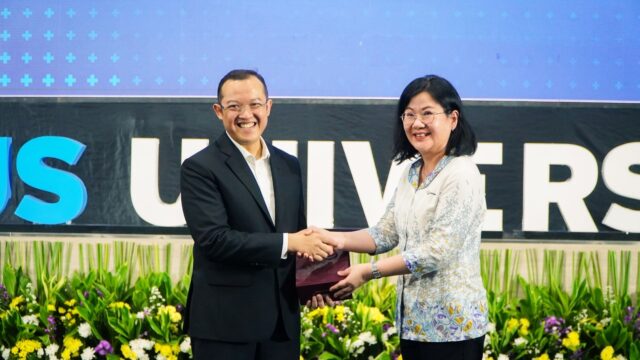
“AKPT serves as a platform for university leaders to learn from one another and strengthen their professional networks. These relationships can open the door to deeper collaboration, whether through faculty and student exchanges, joint initiatives, or the shared use of research facilities and laboratories. Through sustained collaboration, we can continue to strengthen higher education, science, and technology in Indonesia,” said Prof. Badri Munir Sukoco, Secretary General of the Ministry of Higher Education, Science, and Technology, in an interview with BINUS TV.
(Photo Credit: Mufti Al-Warits/Photo Editor: Andi D. Ahnafandra)
Throughout the program, participants gained a deeper understanding of higher education leadership and highlighted the need for approaches that are strategic and collaborative. As universities face increasingly complex challenges, preparing leaders who can drive innovation, strengthen partnerships, and create lasting impact remains essential to the future of Indonesian higher education.
Author: Mita Adhisti | Editor: Yusuf Rifai

Comments :