



BINUS HealthTech Festival 2026 Drives Technological Innovation for More Accessible and Affordable Healthcare Services in Indonesia
 Jakarta, 28 August 2026 – Ensuring equitable and affordable healthcare remains a significant challenge in Indonesia. As an archipelagic nation with more than 17,000 islands, the country faces geographical barriers that affect healthcare infrastructure development, medicine distribution, and the equitable deployment of medical professionals, particularly in rural and remote areas (BKPK, 2026). Accelerating healthcare technology innovation is therefore key to bridging these gaps and broadening accessible healthcare services across the region.
Addressing the growing need for healthcare innovation, BINUS University hosted BINUS HealthTech Festival 2026 under the theme “Navigating Future Health Technology to Support Indonesia’s Universal Health Coverage (UHC).” Central to this theme is to deeper understanding of what Universal Health Coverage means in practice.
(Photo Credit: Andi D. Ahnafandra)
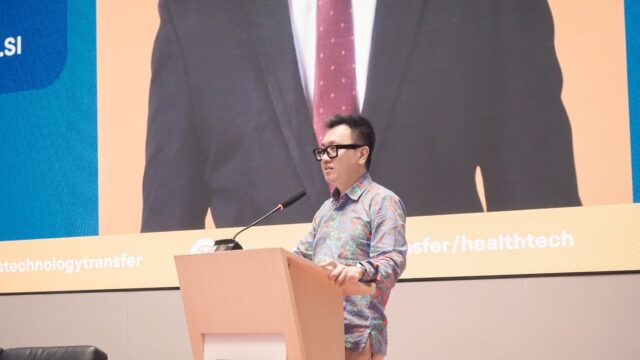
“Universal Health Coverage should not be measured solely by how many people are covered by the healthcare system, but also by whether they can actually access quality healthcare when they need it. Through the BINUS HealthTech Festival, we aim to encourage innovations in AI, biomedicine, and health technology to move beyond research and be translated into practical, accessible, and affordable solutions for society,” said Prof. Dr. Juneman Abraham, Vice-Rector for Research and Technology Transfer.
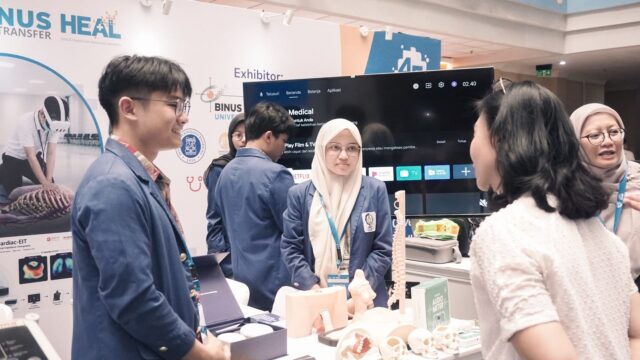
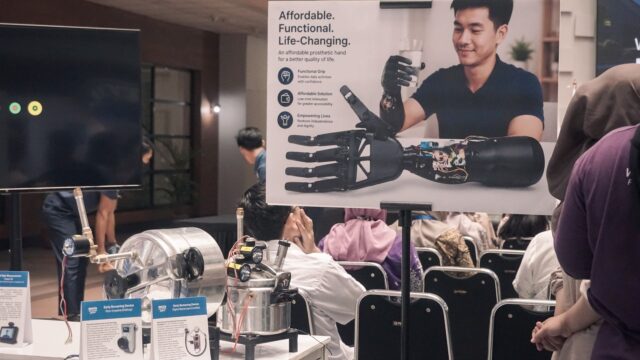
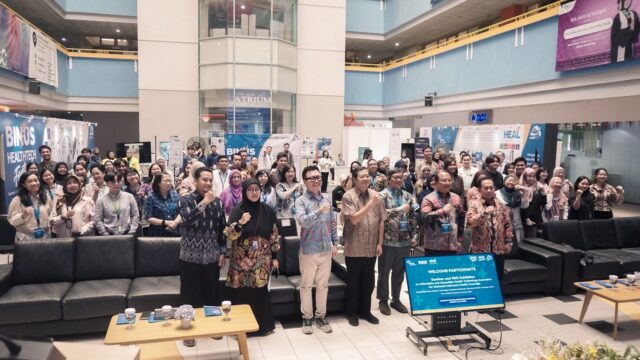
This commitment was reflected throughout the festival, which brought together stakeholders from across the healthcare ecosystem, including academia, industry, healthcare providers, and policymakers. Held at BINUS @Kemanggisan – Anggrek Campus, the event facilitated knowledge exchange while showcasing the latest technologies developed by participating institutions.
(Photo Credit: Andi D. Ahnafandra)
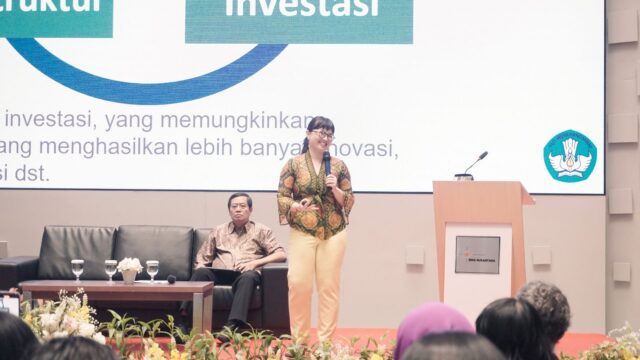
Reinforcing the importance of cross-sector collaboration in advancing Indonesia’s healthcare sector, Prof. Stella Christie, Deputy Minister of Higher Education, Science, and Technology alongside Prof. Dante Saksono Harbuwono, Deputy Minister of Health, shared the government’s strategic direction, policy priorities, as well as plans that will be developed in the coming years.
“When we talk about Universal Health Coverage, we must recognize the critical role of research and technology. Technological innovation can only thrive when powered by high-quality research that expands the frontiers of knowledge. This is essential for attracting the large-scale investments that are necessary to develop healthcare infrastructure and services that can meet growing needs at scale while remaining accessible, affordable, and reliable,” stated Deputy Minister Stella.
To strengthen the quality and impact of research, the Ministry of Higher Education, Science, and Technology provides research grants through a co-funding scheme with industry partners. The program promotes collaboration between higher education institutions and industry to develop research projects, ensuring that research remains relevant to both market and societal needs, which have the potential to be scaled further.
(Photo Credit: Andi D. Ahnafandra)
Another area that requires attention is data integration. Deputy Minister Dante highlighted this issue based on many cases he has encountered, where referred patients were often required to repeat their medical history at different stages of care. This often happens because patient data is not integrated across healthcare facilities and referral systems.
“More than 300 health applications were recorded by the Ministry of Health in 2024, but many were still not connected to one another. This creates fragmented data and duplicated information, which adds to the administrative workload at community health centers and leaves less time for healthcare workers to engage with patients. That is why we need a more inclusive and integrated healthcare system, supported by digital technology,” he explained.
(Photo Credit: Andi D. Ahnafandra)
Amid rapid technological development, the Ministry of Health has strengthened digital integration through the SATUSEHAT platform. The system brings together patients’ personal health records from hospitals, clinics, laboratories, and blood transfusion units, creating a more connected flow of information while supporting evidence-based government policies and decisions.
A more integrated healthcare system also calls for closer collaboration across sectors. BINUS University contributes to this effort by combining its strengths in technology and digitalization with high-quality research and partnerships involving stakeholders at both national and international levels.
(Photo Credit: Andi D. Ahnafandra)
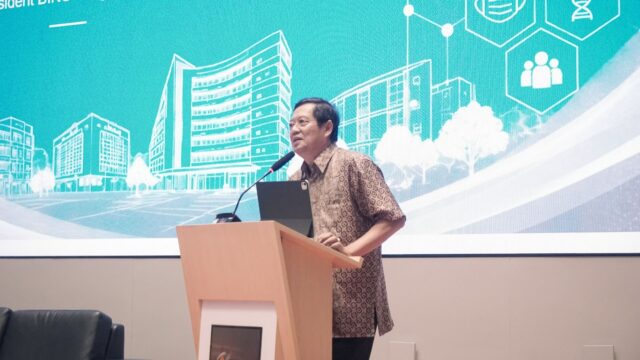
“Advancing health technology requires strong research, continuous innovation, and close collaboration with industry. At BINUS, we are committed to strengthening all three by improving research quality and creating more opportunities for investment in solutions developed together with our industry partners,” explained Prof. Dr. Harjanto Prabowo, Vice President of BINUS Higher Education & Professional Services.
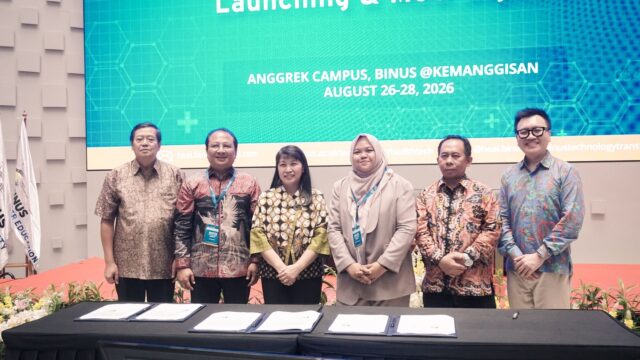
As a first step toward building long-term partnerships in this sector, new agreements were signed between BINUS University and RSD Gunung Jati Cirebon, RS An-Nisa Tangerang, and the Medical Technology program at Institut Teknologi Sepuluh Nopember (ITS) to support the development, validation, and implementation of health technology research and launched the BINUS HealthTech Advanced Laboratory (HEAL).
(Photo Credit: Andi D. Ahnafandra)
Another highlight of the festival was the panel discussion “From Innovation to Impact: Translating Health Technology into Equitable Care,” alongside the announcement of the Youth HealthTech Innovator 2026 winners. The competition encouraged high school students from across Indonesia to create practical and affordable health technology solutions for rural communities. This initiative reflected BINUS University’s commitment to advancing high-impact research and innovation in addressing the nation’s challenges, which aligned with the university’s vision to fostering and empowering society in building and serving the nation.
(Photo Credit: Andi D. Ahnafandra)
Through the BINUS HealthTech Festival 2026, we reaffirmed our commitment to advancing high-quality, impactful research by strengthening collaboration among academia, government, industry, and healthcare stakeholders. By accelerating research translation and technology transfer, we aim to develop practical, scalable, and affordable solutions that can improve access to quality healthcare across Indonesia.
Author: Mita Adhisti | Editor: Aninda Rahmasari
Reference:
BINUS University (2026) BINUS HealthTech Festival 2026 Dorong Inovasi Teknologi untuk Layanan Kesehatan yang Lebih Merata. Available at: https://binus.ac.id/2026/08/binus-healthtech-festival-2026-dorong-inovasi-teknologi-untuk-layanan-kesehatan-yang-lebih-merata/

Comments :